
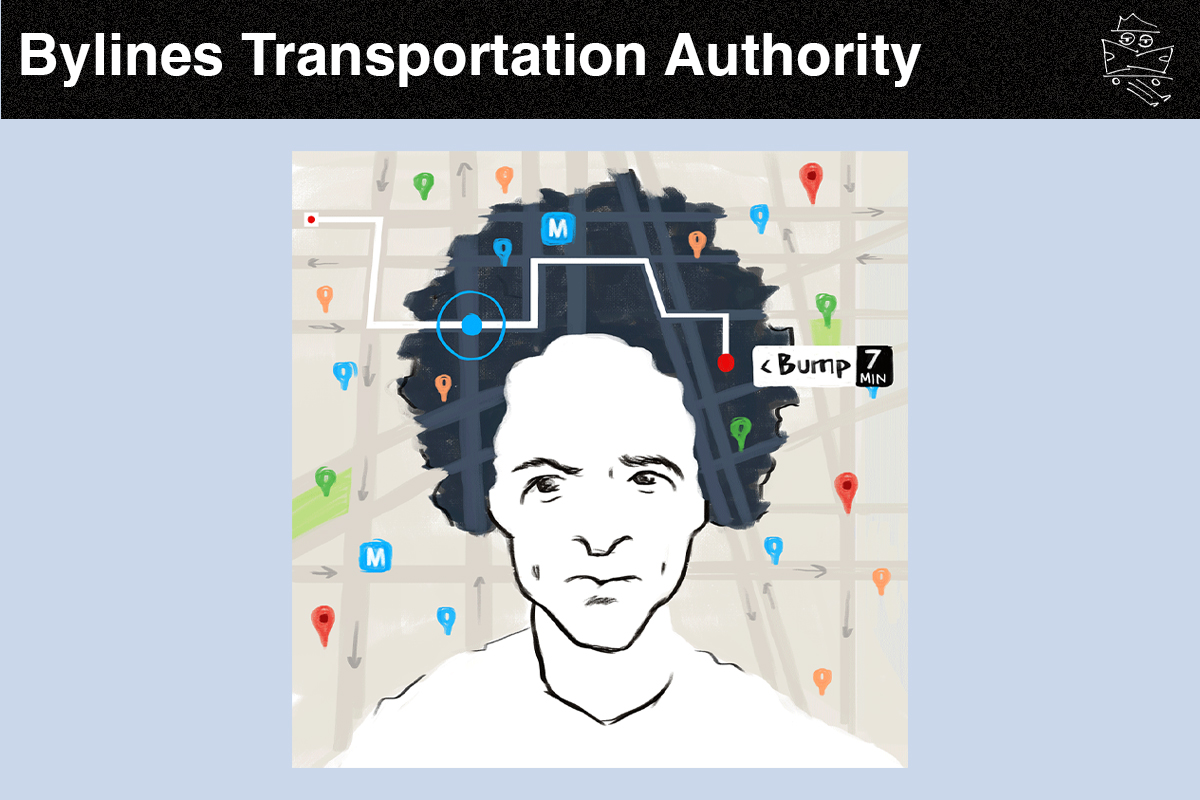
Dave Caddo has a distinguished tase in skate spots. The secret to developing such a palette is more à la carte than set menu, apparently.
This story is part of ‘New Year, New Rules’ which welcomes columnist Ian Browning and his ‘Rules of Skateboarding’ series of interviews to Skate Bylines.
Interview by Ian Browning
Illustration by Cosme Fenández Gonzales
Ian Browning: Every time I see a clip of you skating these days, you’re skating a spot I’ve never seen before. I was wondering if you approach skating a spot off the beaten path differently than you approach skating a super well known spot?
Dave Caddo: Yeah, you definitely have to gauge who’s around. If it’s a house spot, look and see if there’s any activity, if people are home. If someone comes out right away, I mean, a house spot is kind of like someone’s personal property even if they’re renting. But I usually just barge it and try to react accordingly to whatever happens.
Do you treat getting kicked out of a house spot differently than, say, getting kicked out of a plaza in midtown?
For sure, because if it is a security guard, it is like, it’s not their personal property. It doesn’t matter. It’s their job. I can see how someone would get more angry over their actual house, you know? Even though you might not be fucking up their place people don’t understand what the fuck we are doing a lot of the time.
“What is that noise? It’s loud! Are they fucking something up?”
There’s a weird disconnect. I have to remember to think of that. People have no idea why we’re doing this, or even what we’re doing. Sometimes, I want to ask people what they think I’m doing there. Some people might think we are actually skating just to fuck something up—I bet people think of it the same way they’d think of graffiti. As if the specific point is to deface the property. It probably just looks insane to them. I always forget about that one. If you had no context, it would look crazy. And we have such an understanding of it, that we forget what it must look like to them and we can’t believe they want us out.
Most people don’t know shit about skateboarding. So what it looks like for them is probably crazy as fuck. I always forget about that one. I guess it would look crazy if you have no context of what it really is. And then for us, we have such an understanding of it it’s like, we can’t fucking believe that they think it’s that crazy.
You’re like, “What’s the big fucking deal, you have this cellar door right here?“
I’m just riding on it with these urethane wheels—I’m going to go up and down it. It’s going to make a loud noise, but it’s going to be fine. To them it probably looks like we’re trying to bust through it or something. I don’t know, but there’s definitely a disconnect there.

Dave Caddo 🖊️ Cosme Fernández Gonzales
All right, what you refer to as “carting”, how would you define it?
It’s getting taken to spots, really. Skaters share spots, and people will tell you about a spot. But I think a video part is something that a skater should have some involvement in. Some discretion about what spots they skate and what kind of tricks they want to do.
I feel like a ton of parts have been made through “carting“, where it could have just been a filmer or photographer taking somebody that’s good at skating to spots. Just being like, “I bet you could smith grind this. I bet you could feeble grind this.” I think it ends up being a lot of spots that people have already skated a ton. So you get nothing new. No new approach. Somebody ollied it, you can probably kickflip it. It’s just kind of a lame way of skating. There’s still style to the trick and the way you do it, and it’s still somewhat cool. It’s just lacking.
I feel like you can kind of see it when a video part comes out. Sometimes you watch a video and you’re like, “sick”, but it’s just got no flavour. Because if you skate you should want to have your own approach to it. If you’re a street skater, the thing about it is being out in the streets. Not just being in the van and being taken to a spot. Get back in the van, getting taken to another spot.
That’s a shitty lifestyle. That’s how you filmed this part? Somebody took you to spots, you got out of the van, you did your trick and you got back into the van? That’s a piss poor process.
The process is important to you?
I think the process is important enough, because that’s where skating develops. That’s where you get something new and different, and something that stands out besides trick difficulty. That’s where the creativity in skating kind of comes from.
In the last decade people have started unlocking old spots. Like the Sabotage dudes figuring out that if you skated Love Park at night, you could skate there. Or John Shanahan getting a trick at the Forbidden Banks. People going to spots that people didn’t skate because they were busts, or everything was done there, and they’ve found a way to breathe new life into them. When you’re going back to an old spot, do you think it’s important—or worth differentiating—figuring out your way in versus just barging and getting a trick as fast as you can?
Yeah, I guess that goes with the approach of skateboarding. The whole “carting” thing—I think there’s a lot of skaters that don’t do it as much. I feel like not everyone was carting, but carting was the way that you made money off of skating.
If you were going to get paid to skate, I kind of consider 2000 to 2009 – ’10 the dark ages of skating. It was just like, the filmer and photographer decided what a skater would skate. If you were good, you got shipped out to California and you would skate with people that would be like, “You need to do this.” Almost like there were requirements. “Do this handrail.”
Plenty of people were skating and doing cool shit, but you didn’t get paid. You got paid off of getting carted and skating spots. Jumping down stairs and handrails—with a few exceptions. I think once the East Coast skating started to get a foothold within skating again, you could kind of make money off that, and I think it changed out people’s approach. You started to be able to make a video that wasn’t just getting carted to the same handrail spots in Southern California. It opened it back up, I could skate some stuff that I’m actually into and film a video that I actually like.
Things used to be more photo heavy. If you were trying to get paid for your skating, a photo (in a magazine) was what you need. Now with video footage, you just go out with your filmer and you can work more stealthily. Just go to a spot late-night like that and wreck the spot. Now when people are actually hyped on skating a plaza or the Forbidden Banks. Whereas in the mid-2000s, you could skate it, but nobody would give a fuck. At least the skate industry. People would come to New York and skate a dumbass handrail.
Nobody would really go to those spots because it didn’t matter. You got paid to handrail and jump gaps. You needed a photo, so it needed to be something gnarly, and you’ve got a photographer that’s making a living off of shooting skating. So since they wanted to make a living, you had to think of something that they could shoot photo of. Some nosegrind nollie flip at Love Park wouldn’t to get ran. Even though it’s way better than doing a frontside feeble down a 16 stair.
Ian Browning is a journalist and essayist based in New York who writes about the intersection of skateboarding and culture. He has written for Quartersnacks, Simple Magic, PLANK, Closer Skateboarding, Jenkem and Eater. As a columnist for Skate Bylines his ‘Rules of Skateboarding’ series explores nuances with notable characters.
Stories about architecture and skate spots
“It’s an accessible first point of, like, ‘How do I connect with this culture?’” — Ian Browning examines municipal space in New York City through the lens of his Quatersnacks story on the Lower East Side Skatepark in ‘The Civic Center of New York City Skateboarding’.
“What happens when a spot is destroyed forever? How, then, is its legacy preserved in a tangible form that goes beyond images and stories?” — Dominique Teoh explores the architectural concept of ‘spolia’ which “rubble into something both relic and resurrected” through a case study in Love Park and Love Malmö.
“It’s becoming a true community spot again, like it once was” — In an on-the spot dispatch from the Brooklyn Banks, Tyrese Alleyne Davis speaks to the generations of locals brought together by red bricks under the Brooklyn Bridge.
More ‘Rules of Skateboarding’ from the East Coast
Josh Stewart Cuts Through the Static on Music in Skate Videos
Fred Gall talks Bondo, Rub Bricks and Breaking in Spots
Articles featuring the author
“Why does this story matter? Why is it relevant to the current moment and that publication? Why are you the person to tell it?” — Cole Nowicki, Ian Browning, Josh Sabini, Claire Alleaume, Norma Ibarra, Greg Navarro and Alex White share insights on pitching stories to skate magazines ans brands from a variety of creative perspectives and backgrounds in ‘Making The Big Leagues’.
“One of the main ideas that led to this series was wanting to be able to bring the type of debate that happens during a slow shift at a skate shop, or on the periphery of a wound-down session, where skate nerds air out their strong opinions.” — Ian Browning discusses the origin of ‘The Rules of Skateboarding’ and his highlights from the series.
This story was originally published by Village Psychic on February 25th 2019 under the headline ‘The Rules of Skateboarding #10: Dave Caddo’. Ian Browning joined Skate Bylines in 2026, bringing over his previous columns and continuing ‘The Rules of Skateboarding’ series.
